
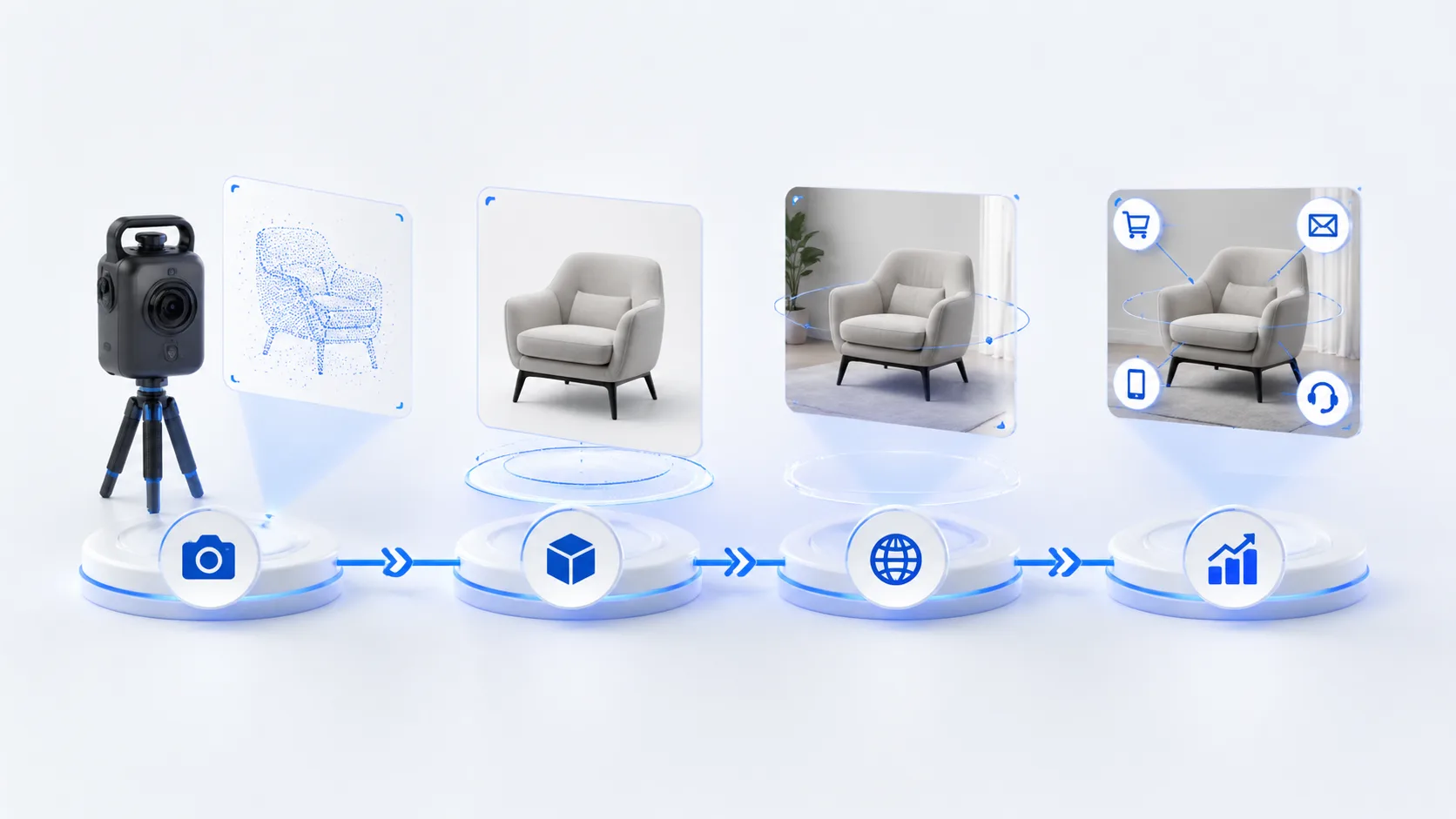
3DGS Lightweight Delivery for Faster Web Experiences
High-fidelity 3D is finally landing on the web, and 3D Gaussian Splatting (3DGS) makes it look great. The challenge: even beautiful scenes underperform if they stall on first interaction, spike memory, or drag the main thread. The result is common—3D is relegated to a hero block no one dares to scroll, or a demo that loads once and gets removed from the growth plan.
There is a better way. This playbook shows how to make 3DGS lightweight for landing pages, demos, and embedded experiences. The core idea is route-first 3D: guide visitors through a purpose-built flow instead of free-flying an entire capture. With xdreality, teams prioritize routes, next steps, and publishing behavior over raw scene size—so the experience ships fast and converts.
Why 3DGS gets heavy on the web
3DGS can be dense by design. On the web, that density competes with performance budgets.
Common weight drivers:
- High splat counts, often beyond what is visible on small viewports
- Large binary payloads that challenge mobile networks and data caps
- GPU fill rate pressure when dense splats overlap in screen space
- CPU and memory overhead for decoding and buffering
- Long-tail assets loading despite never being in the camera path
For frontend and growth teams, the risk is simple: a page that looks amazing in a lab fails when traffic spikes on average devices. For 3D pipeline owners, there is a real cost in constantly downscaling assets post-capture. The answer is not just optimizing the asset; it is optimizing the journey.
Rethinking quality: route-first 3D that converts
The highest converting 3D pages do not try to show everything. They show the right thing, at the right moment, with a clear next step.
Route-first means:
- Define a guided path through key frames and camera nodes
- Only load what the current step requires, and prefetch the next
- Pair each scene moment with a clear action: learn more, configure, book, buy
By narrowing the field of view to a purposeful route, you reduce the asset footprint and stabilize frame pacing. Visitors perceive crispness because the content is intentional. Stakeholders see impact because the path moves from visual wow to measurable engagement.
This is where xdreality differs: it is built around routes, not an infinite canvas. Scenes are organized as guided tours, virtual showrooms, and 3D product pages with clear states and outcomes. The result is 3dgs lightweight delivery by default, not as a last-minute patch.
3DGS lightweight techniques that actually ship
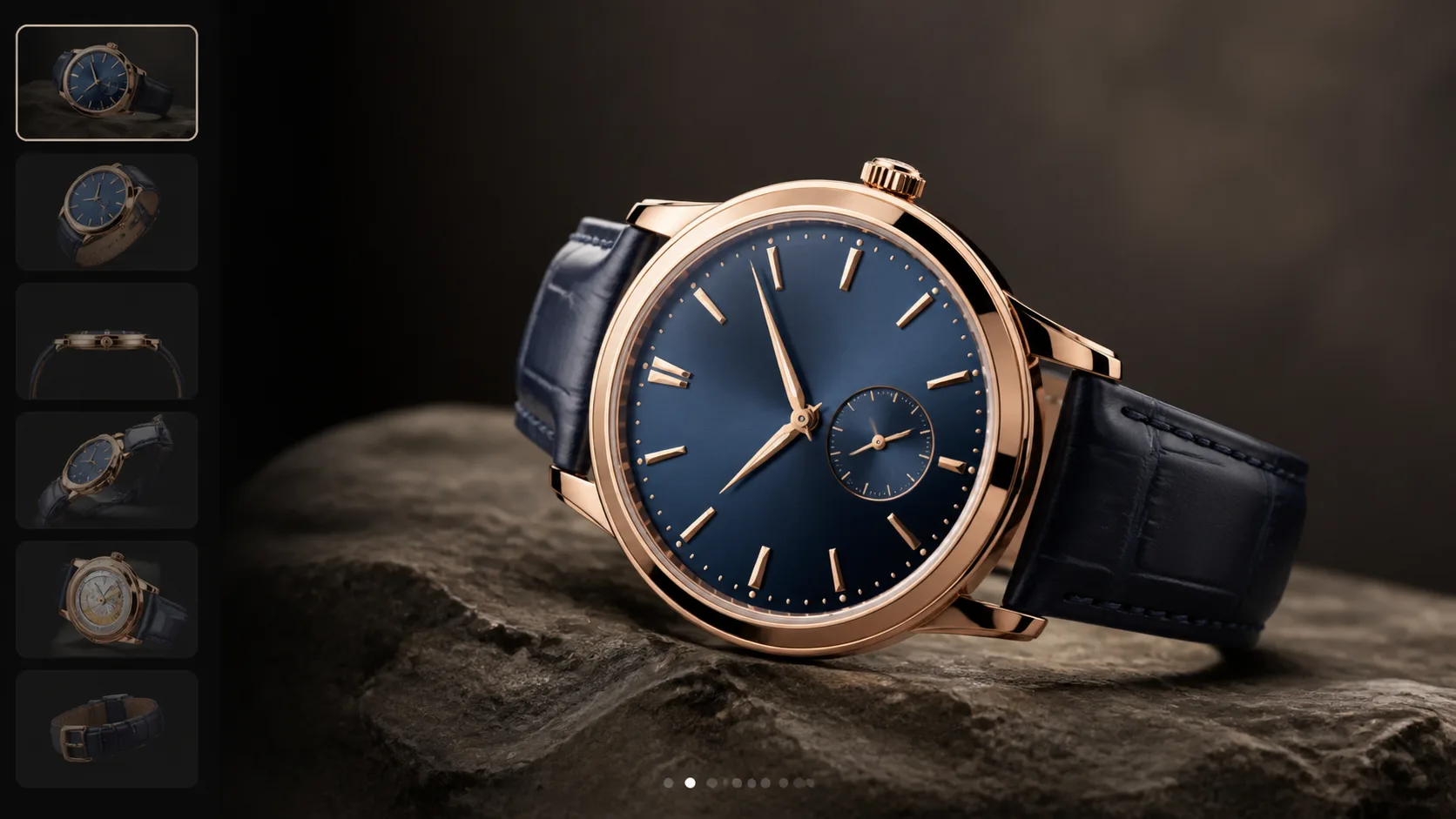
There are many ways to trim a 3DGS experience. What matters is what works reliably in production embeds and landing pages.
Foundational tactics:
- Splat pruning by visibility: drop splats that never meaningfully contribute along the defined route
- Distance-aware reduction: lower density outside the route’s camera cone and behind occluders
- Screen-space caps: limit splats per pixel to stabilize overdraw on mobile GPUs
- Quantization and compression: use fewer bits for color and position where acceptable, with visual checks per route
- Progressive tiling: stream tiles in route order, not scene order
- Device-aware presets: choose smaller footprints and lower splat caps for mid-tier mobile
Route-aligned delivery patterns:
- Step-based streaming: load the current step fully, and prefetch the next step’s delta only
- Predictive prefetch: when a visitor hovers over a CTA or swipes near a hotspot, fetch the next node’s data
- Pause-heavy regions: freeze background detail during transitions to keep interaction responsive
- Variant gating: maintain multiple lightweight variants and pick based on viewport, network, and interaction intent
Supporting UX details that pay off:
- Smoothly fade-in splats during step transitions to mask bandwidth variability
- Use thumbnails or image placeholders for off-route peeks; reveal 3D only when intent is clear
- Keep gestures scoped to the route; reserve free exploration as a secondary mode after the main journey
These practices do not reduce perceived quality. They focus quality where it matters—on the guided story that leads to the next step.
Architecture patterns for web performance with 3D
Frontend teams can pair the above with a delivery stack that respects page budgets.
Practical patterns:
- Lightweight bootstrap: ship a minimal shell, show an immediate first frame, and progressively enhance controls
- Chunked assets over HTTP/2 or HTTP/3: smaller pieces invite better parallelism and recover faster on flaky networks
- Edge caching by route step: cache tiles per step so popular nodes stay hot globally
- Idle-time hydration: keep non-critical UI code dormant until the first interaction completes
- Strict memory ceilings: cap resident set size on mobile and gracefully degrade density before page performance slips
- Analytics-informed tuning: compare time-to-first-frame, interaction stability, and drop-off between steps to guide adjustments
When 3D must embed into a bigger page, isolate it:
- Use a dedicated container with its own resource scheduling priorities
- Lazy load the 3D block only when scrolled into the viewport or when a visitor signals interest
- Defer non-essential 3D features to after a key milestone, like the first CTA exposure
Measuring what matters: from frames to funnel
Teams often track FPS only. That misses the business signal. Tie 3DGS optimization to outcomes.
Useful metrics for web performance for 3D:
- Time to first frame visible and interactive
- Stability during the first route transition
- Memory ceiling adherence on common mobile devices
- Step completion rate for the primary route
- Click-through to the next action: configuration, sign-up, add to cart, or booking
- Abandonment during the first 5 seconds vs after the first CTA exposure
Tie these to experiments:
- Compare a free-fly version vs a guided route
- Test high-density vs route-scoped density with the same visuals
- Try two route lengths: short orientation vs deep dive, each with a focused CTA
The goal is not to hit a universal target. It is to remove friction until the next step happens reliably for your audience.
How xdreality makes 3DGS lightweight by default
xdreality is a route-first 3D platform for room tours, virtual showrooms, 3D product pages, and guided interactive experiences. Instead of pushing raw scene fidelity, it prioritizes movement through a clear story and a clear next step—then publishes with lightweight defaults.
What that looks like in practice:
- Route builder: define camera nodes, timing, and transitions that focus attention
- Step-aware delivery: publish per-step tiles and prefetch the next step’s payload
- Density budgets per route: set splat caps and device-aware presets that maintain visual intent while staying light
- Action-first UI: pair each step with CTAs, highlights, or product detail panels so visitors know what to do next
- Lightweight embeds: generate small, embeddable experiences tuned for landing pages, demos, and partner sites
- Observability: monitor first frame time, route progression, and device-level performance to guide iteration
The outcome: 3dgs lightweight delivery that aligns with growth goals, respects frontend budgets, and keeps pipelines sane.
Get hands-on: review a lightweight 3D publishing workflow with xdreality
Ready to apply this to your next release? Here is a practical workflow you can review with the team.
- Import: bring in your 3DGS capture and any supporting imagery or product data
- Route: create a concise route of 4 to 8 steps that hits the essentials without roaming everywhere
- Budget: assign density caps and device presets; define a small-first frame target for mobile
- Preview: test step streaming and prefetch behavior on mid-tier devices and real networks
- Instrument: enable basic analytics for first frame, step completion, and CTA click-through
- Publish: export an embed or page link tuned for landing pages and demos
- Iterate: adjust density, order of steps, and CTAs based on engagement data
If your current 3D flow struggles to load fast on real pages, the route-first approach is the lever. You do not have to abandon fidelity. You simply allocate it where it matters to conversion.
Related reading and route-first examples
To turn lightweight delivery into a complete publishing system, continue with:
- From 3DGS Model to Web for the full path from capture to guided routes, product pages, and room tours.
- 3D Agent and Skill Workflows for Content Production for operationalizing optimization, copy, QA, and publishing steps.
- Product Showcase for guided 3D product pages with focused CTAs.
- Virtual Showroom for multi-step showroom flows that benefit from route-aware streaming.
- Virtual Tour Software if you are comparing broader guided-tour delivery patterns.
- Matterport Alternative if you need a clearer route-first positioning page for evaluation traffic.
Review a lightweight 3D publishing workflow with xdreality and turn heavy scenes into focused, fast, and action-oriented experiences.