
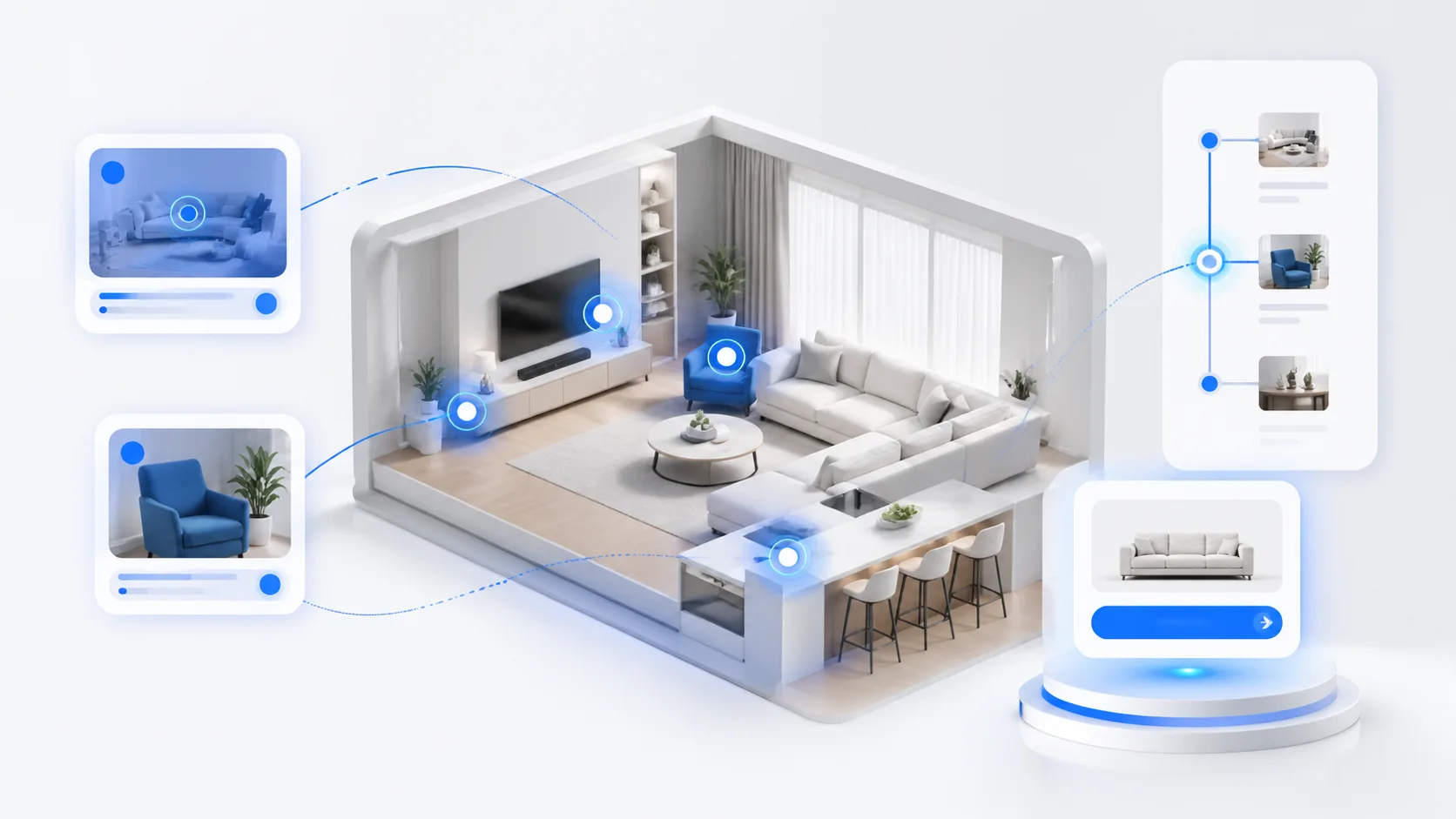
B2B buyers want to see, not imagine. Yet most digital catalogs are static grids and PDFs that fail to communicate scale, configuration options, or the story behind a collection. The result is missed context in discovery calls, longer sales cycles, and creative teams buried in manual publishing work.
xdreality introduces a route-first, agent-assisted way to produce, localize, and publish 3D sales catalogs and virtual showrooms—so revenue, sales, and creative ops can ship story-driven experiences faster, with less rework.
Why B2B catalogs stall: manual, brittle, and hard to scale
Even with high-fidelity 3D assets, the path from product library to a sales-ready experience is still too manual. Teams juggle modeling tools, page builders, and asset hubs—none designed for “how a buyer should walk the story.” Common pain points include:
- Fragmented handoffs between CAD, rendering, copy, localization, and web publishing
- Inconsistent storytelling across product families and regions
- Static content that can’t adapt to buyer roles, use cases, or configurations
- Last‑mile bottlenecks: hero scene updates, variant swaps, and pricing context
- Limited analytics on what routes buyers follow and where they drop
The outcome is predictable: creative ops carry a growing backlog, sales enablement can’t keep pace with launches, and revenue operators have little visibility into content performance. A better operating model starts with the route—the narrative path a buyer follows through a 3D catalog.
Route-first: the backbone of an agentic 3D catalog workflow
A route-first approach treats the buyer journey as a sequence of scenes, hotspots, and decision points. Instead of publishing isolated 3D viewers or static product pages, you assemble a guided narrative that maps to your sales motion.
In xdreality, a route defines:
- Scenes: rooms, vignettes, or product contexts that anchor attention
- Waypoints: the steps that connect scenes into a clear exploration path
- Interactions: hotspots for specs, compare, configure, and add-to-brief
- Branches: alternate flows by industry, role, region, or campaign
Why this matters for B2B:
- Faster comprehension: buyers grasp fit, scale, and value paths quickly
- Consistent enablement: sellers drive demos from the same guided structure
- Measurable narrative: every step is trackable, so ops teams can optimize
This route-first structure is what makes the workflow agentic: agents can assist in assembling, validating, and localizing routes because the story is expressed as a navigable model—not a pile of assets.
The agentic 3D catalog workflow in xdreality: step by step
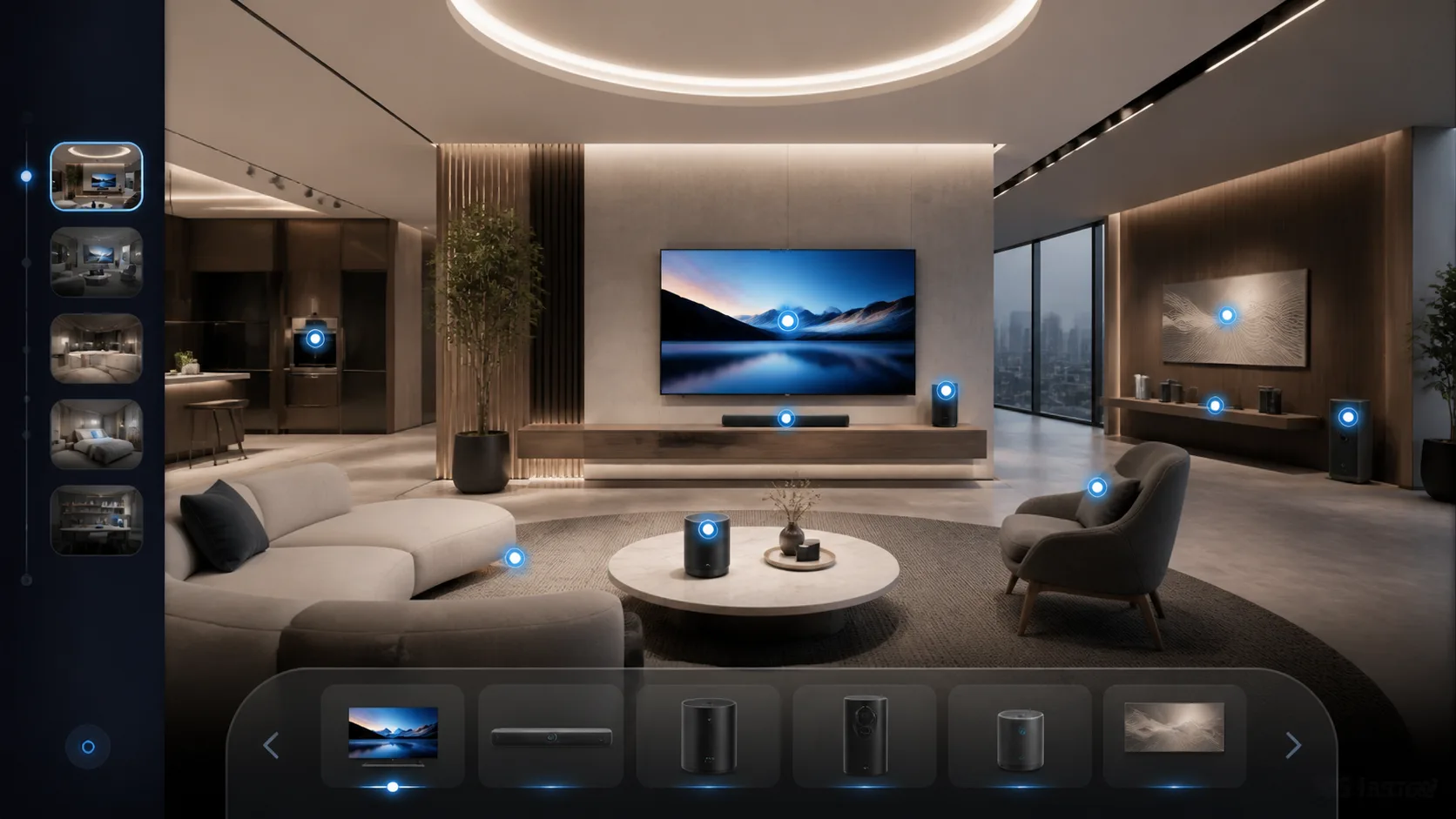
Here’s how B2B sales teams, revenue operators, and creative ops use xdreality to move from 3D collections to sales-ready experiences without the busywork.
- Ingest and organize your 3D collection
- Import product families and hero scenes from your existing libraries
- Attach metadata from your PIM/PLM: SKUs, variants, regions, availability
- Group items into publishable collections aligned to campaigns or verticals
- Draft the narrative route
- Start from a template for a 3D sales catalog, virtual showroom workflow, or product page
- Define scenes and waypoints that mirror your sales conversation
- Drop in hotspots for specs, compare, and “add to brief” actions
- Agent-assisted story building
- Generate route outlines from collection metadata (families, use cases, compatibility)
- Propose section copy, feature highlights, and scene labels for each waypoint
- Identify missing assets and call out gaps before production begins
- Localization and variant paths
- Spin regional branches with localized copy, units, and compliance notes
- Gate SKUs by market or availability, so every route stays accurate
- Create role-based branches (specifier, procurement, operator) with tailored detail
- Guided interactivity that supports sales
- Enable compare-in-place to contrast models and configurations without page hops
- Trigger short animations that reveal installation clearances or service access
- Link to pricing tiers or CPQ from decision waypoints, not every hotspot
- Publish as a 3D sales catalog, showroom, or landing flow
- Embed as a product page, a multi-scene virtual showroom, or a campaign micro-site
- Hand a seller-controlled route to the field for guided demos
- Package a linkable “buyer route” for follow-ups and deal rooms
- Measure and iterate
- See which scenes, hotspots, and branches hold attention
- Flag friction: common drop points, repeated replays, or excessive zooms
- Use insights to refine copy, reorder waypoints, or create new route patterns
This is the essence of agentic product storytelling: teams guide the story structure, while agents assist with assembly, checks, and scalable variation.
Virtual showroom workflow that aligns sales, marketing, and ops
Most “showrooms” are beautiful, but hard to operate. xdreality makes them living assets that sellers can actually use in-cycle.
- Campaign to catalog: launch a thematic showroom that routes into product-specific scenes
- Seller modes: lock the narrative for first meetings; enable deeper branches for technical follow-ups
- Demo hygiene: ensure every route references the same specs and availability data
- Hand-off continuity: share the exact route to buyers post-call so they can revisit key waypoints
For revenue operators, the virtual showroom workflow provides consistent measurement across routes. You see which stories convert, what content prompts configuration requests, and where regional branches outperform. For creative ops, you get reusable scenes, copy blocks, and componentized hotspots that can be remixed without starting from zero each time.
Localization and personalization without the rework spiral
Localization and personalization usually explode the workload. With a route-first model, variation happens at the route layer, not in endless duplicated pages.
- Regional branches inherit master routes, then override copy, units, and gated SKUs
- Verticalized paths reuse core scenes but re-sequence waypoints for role relevance
- Collections stay coherent: when a hero scene updates, downstream routes inherit improvements
This keeps your 3D sales catalog clean, compliant, and fast to adapt—without version debt or last-minute scrambles before launches.
How xdreality fits in your stack
xdreality is designed to connect with the tools you already use and the processes you already run:
- Product data sources: map SKUs, variants, and attributes into route metadata
- Web and CMS: publish routes as pages or embeds without fragile custom builds
- Sales tools: hand sellers linkable routes for demos and follow-ups
- Analytics: capture route interactions for ops and content teams to optimize
Because the unit of work is the route, not the raw asset, governance becomes practical. You can set who owns the master route, who can propose branches, and how regional teams publish localized flows—all with clear lineage.
What great looks like: practical patterns to copy
If you’re moving from a static catalog to an agentic 3D catalog workflow, start with proven patterns:
- Launch a flagship virtual showroom that anchors your core value narrative
- Create role-based routes for specifiers, procurement, and operators
- Add a fast-lane route for campaign traffic that previews three hero scenes, then routes to compare
- Maintain a “seller standard” route for first meetings, with tight timing and clear next steps
- Build a post-demo follow-up route that recaps decisions and links to configuration or CPQ
Each pattern shortens time to value for the buyer and gives your team a reusable foundation for the next collection or market launch.
Results B2B teams can operationalize
When teams switch to route-first publishing with agent assistance, they typically report:
- Faster assembly of new collections and launches
- Fewer last-mile edits and fewer region-specific exceptions
- Higher seller adoption due to consistent, guided demos
- Cleaner analytics across products and campaigns
These aren’t promises—they’re the operational advantages of expressing your catalog as routes that agents and humans can co-manage.
Get started: make your 3D collections sales-ready
If you have strong 3D assets but your catalog still feels flat, it’s time to go route-first. xdreality gives agent-assisted teams a practical way to turn collections into guided catalogs, virtual showrooms, and sales-ready landing flows—without adding headcount or complexity.
Closing the gap between product truth and buyer understanding starts with your narrative structure. Let’s make it route-first.
Related reading and route-first sales paths
- 3D Agent and Skill Workflows for Content Production for the broader agent-assisted production model behind this catalog workflow.
- Virtual Showroom vs PDF Catalog for Wholesale Brands for the buyer-facing case against static catalogs.
- 3DGS for Ecommerce Product Pages if your catalog routes also need to support product-level conversion pages.
- Virtual Showroom for the core product surface most B2B catalog routes map into.
- Contact if you want to review an agent-assisted catalog workflow with the xdreality team.
Talk with xdreality about agent-assisted 3D catalog publishing.